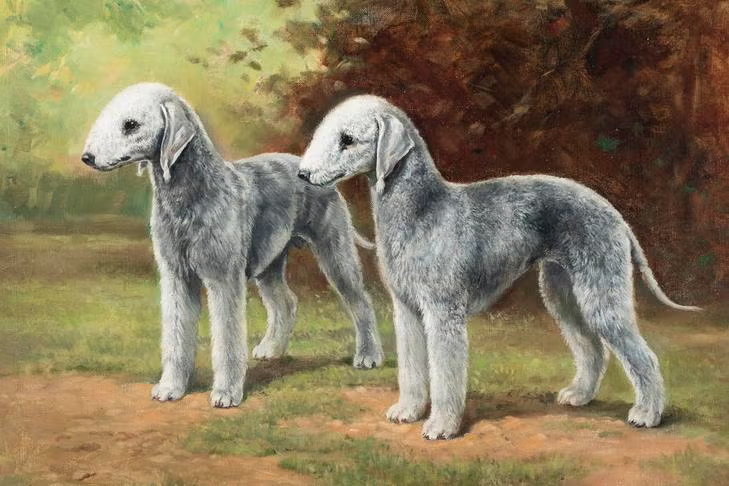
The Bedlington Terrier as we know it today was developed in the north of England, although its exact origins remain uncertain. According to one theory, the breed arrived in Britain with travelling nomadic people, who used these dogs for hunting. Along their journeys, the dogs proved exceptionally effective at eliminating rodents on the estates they passed, quickly convincing local landowners of their value around farms and homes. Despite its lamb-like appearance, this fearless hunter of rats, rabbits, and other small game soon became a favourite companion of the miners in northern England.
For a time, the breed was known as the Rothbury Terrier, after the dogs kept and worked on the Northumberland estate of Lord Rothbury. Eventually, however, it adopted the name of the nearby village of Bedlington, which has remained ever since.
The first dog officially recognised by this name was Ainsley’s Piper (1825), owned by Joseph Ainsley, who also came from Bedlington. Piper was not only an outstanding hunting dog throughout his life but also became famous for saving a child from an attacking pig.
Later, the breed is believed to have been crossed with other terriers, including the Dandie Dinmont Terrier, Soft Coated Wheaten Terrier, and Kerry Blue Terrier. An interesting historical anecdote tells of the Earl of Antrim, whose two dogs from the same litter each won at a dog show—one competing as a Bedlington Terrier and the other as a Dandie Dinmont Terrier. The Bedlington’s elegant outline and distinctive arched back also reflect the influence of the Whippet, while Otterhound ancestry has contributed to the breed’s versatility and working ability.
The Bedlington Terrier first appeared at dog shows in 1870, and in 1877, the Bedlington Terrier Club, the world’s first breed club dedicated to the breed, was established in England.
In the early 1900s, the breed gradually became established as a companion dog and adapted exceptionally well to the needs of modern families. However, don’t be fooled by its innocent, lamb-like appearance. Beneath its soft, carefully groomed coat lies the heart of a true terrier—a courageous, intelligent, and determined dog that deserves both respect and understanding.
In Hungary, the breed is known only within a relatively small circle of enthusiasts. Although its popularity has noticeably increased over the past decade, it is still considered a rare breed.